Story · A Personal Journey

Some decisions shape your career.
Others shape the person you become.

A career can look perfectly planned when viewed in reverse.

Mine was not.

It was shaped by curiosity, calculated risks, difficult transitions and a willingness to begin again.

This is the story behind the roles and titles, and how those experiences shaped the way I think about technology, leadership and the decisions people make when certainty disappears.

Chapter I

The first leap

In 2007, I left a successful career at Microsoft in India to begin a new life in the United Kingdom. There was no better job waiting for me. I did not have a carefully mapped plan, or even a permanent place to live.

When I told my manager I was leaving, he could not understand why. “You have everything here,” he said. Then he gave me an assurance I have never forgotten. “If it does not work out, you can always come back. There will be a place for you here.”

It was a generous offer, and I appreciated it deeply. But I had different dreams.

A few weeks later, I landed at Heathrow and waited for a friend to collect me. I remember standing there with mixed emotions. There was excitement, uncertainty and the natural question of what would happen next.

But one thing felt certain.

I believed in the skills and capabilities I had built. I knew that, given time, I could rebuild my career from anywhere in the world.

Within fifteen days, I secured my first job in the UK. It was not highly paid and it was not the role I ultimately wanted. But it paid the bills, gave me valuable UK experience and provided a place from which to begin again.

At the time, it felt like a small step.

Looking back, it was one of the most important wins of my career. It proved that starting again did not mean starting from nothing.

Starting again did not mean starting from nothing.
Chapter II

Building from the ground up

Long before I advised boards or led cybersecurity functions, I worked close to the technology. I supported systems, resolved complex technical problems and learned how infrastructure behaves when organisations depend on it every day.

My early career was shaped by servers, networks, enterprise applications, virtualisation, data centres and IT operations. At Microsoft, I progressed from Technical Support Engineer to Escalation Engineer and then Technical Team Lead. After moving to the UK, I continued rebuilding from the technical foundations upwards. I managed support teams, led global virtualisation environments and eventually became responsible for infrastructure, security, operations, budgets and people across international organisations.

Those years gave me more than technical knowledge. They taught me discipline. They taught me to investigate what others overlooked. They taught me that systems rarely fail because of one dramatic event. More often, failure develops through accumulated complexity, assumptions left unchallenged and decisions repeatedly deferred.

That technical foundation remains central to the way I work today. When I advise leaders on cybersecurity, resilience, cloud risk or AI governance, I am not approaching the conversation from theory alone. I understand the technology beneath the decision.

Before I learned to advise the board, I learned how the systems beneath it actually worked.
Building a new datacentre during early years in the UK
Building a new datacentre during my early years in the UK. Long before boardrooms, I learned how critical systems are designed, built and operated.
Chapter III

When technology stopped being the hardest problem

As my responsibilities grew, I moved from engineering into operations, cybersecurity, enterprise risk and organisational leadership. The technology became more sophisticated. The real problems became more human.

I saw organisations invest in strong tools, experienced teams and recognised frameworks, yet still struggle to understand their true security position. The issue was rarely a complete absence of capability. It was often a lack of clarity.

Risks were described technically rather than in terms leaders could act upon. Decisions remained unresolved because accountability was unclear. Dashboards presented information without explaining what should happen next.

That changed how I viewed cybersecurity. It was no longer simply a matter of protecting systems or implementing controls. It became a question of how organisations make decisions when information is incomplete, priorities compete and the consequences matter.

The work moved from controls to context. From technology to consequence. From reporting activity to enabling decisions.

That transition shaped the direction of everything that followed.

  1. 2003 
  2. Microsoft
  3. 2007
  4. Starting again in the UK
  5. Infrastructure & operations
  6. Cybersecurity
  7. Leadership
  8. Board advisory
  9. Founder
  10. Author
Chapter IV

From the keyboard to the boardroom

My career gradually moved into roles with wider organisational responsibility. I led global IT and cybersecurity operations, developed enterprise security strategies, built security functions and advised organisations across healthcare, financial services, technology, government, critical infrastructure and the charity sector.

The conversations changed. They were no longer only about platforms, vulnerabilities or technical architecture. They were about trust, investment, accountability, resilience and organisational risk.

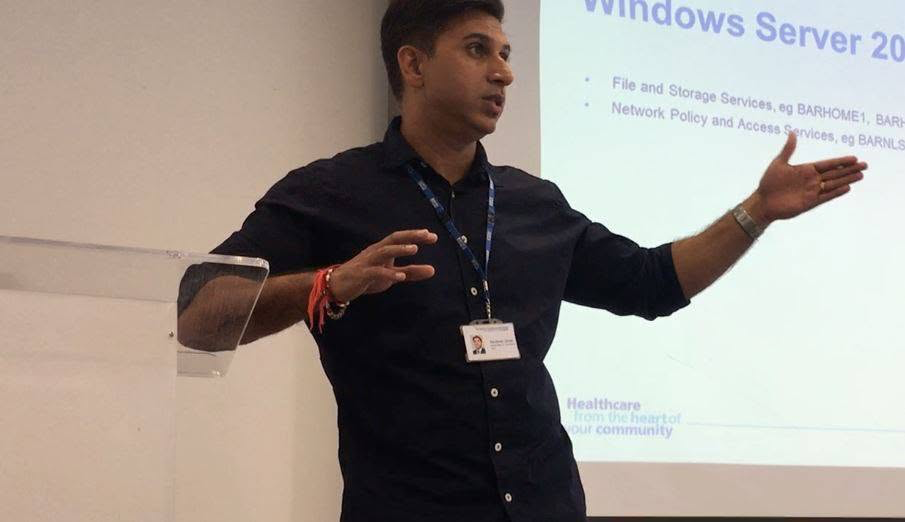
Speaking to technical teams during early leadership years
Speaking to technical teams early in my leadership journey. Teaching technology taught me how to communicate complexity with clarity.
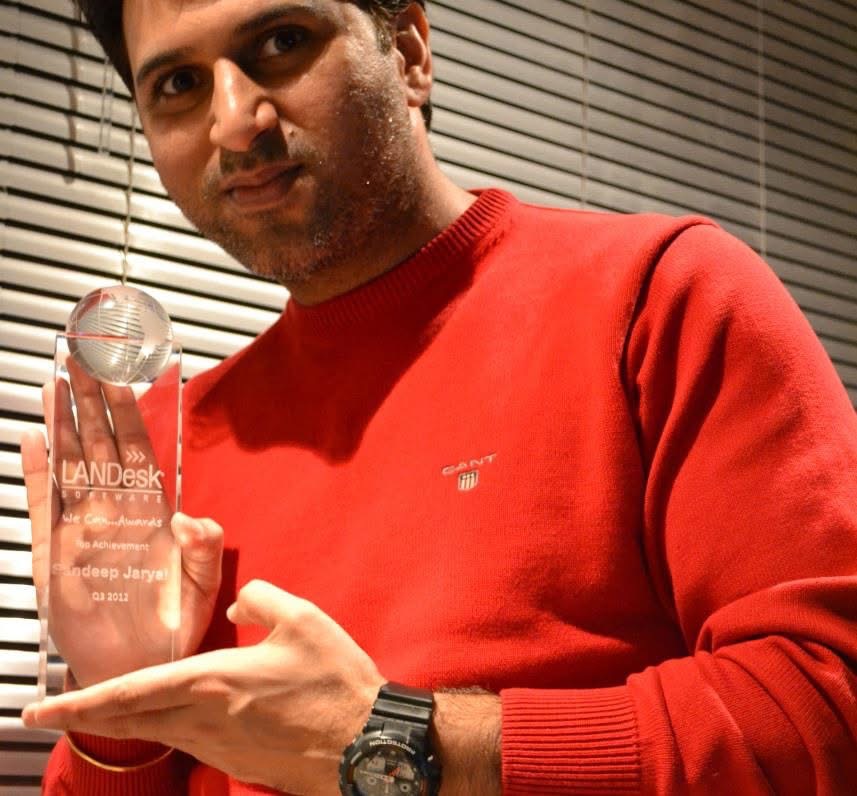
Receiving a LANDESK achievement award in 2012
Receiving a LANDESK achievement award in 2012 — a reminder that technical progress is built through consistency, teamwork and trust.

I worked with CIOs, CEOs, executive teams and boards facing decisions for which there was rarely a perfect answer. Those experiences taught me that leadership is not demonstrated by pretending to have certainty. It is demonstrated by remaining calm, asking better questions and helping people make the best possible decision with the evidence available.

My technical background allowed me to understand what was happening beneath the surface. My leadership experience allowed me to translate that understanding into something executives could use.

That ability to connect technical depth with executive decision-making became one of the defining threads of my career.

Technical depth matters most when it can be translated into a decision someone can act upon.
Chapter V

Building what I could not find

After years of working across organisations of different sizes and sectors, I kept encountering the same patterns. Security assessments were inconsistent. Framework scores were often presented without sufficient organisational context. Consultants repeatedly rebuilt similar approaches from scratch. Boards received more information, but not always greater clarity.

I began to ask a different question. What would security work look like if it were designed around better decisions rather than more documentation?

That question led me to build ScyberX. It later led to SecurePosture, a security posture intelligence platform designed to connect frameworks, organisational context, risk and threat relevance. SecureMyChild followed from a different but equally important concern: families and schools needed clearer, more practical guidance about children’s online safety.

Writing became another expression of the same thinking. The Cyber Mirage explored why organisations can appear secure without understanding their true posture. The CISO Who Secured the Mind examines judgement, awareness and leadership under pressure in the age of cybersecurity and AI. Cyber Clarity became a way to share shorter ideas through video, writing and conversation.

These may look like separate projects. To me, they are connected by one purpose. Helping people see more clearly before they are required to make a consequential decision.

Chapter VI

The work continues

People sometimes ask whether I consider myself an engineer, a cybersecurity leader, an adviser, an author or a founder. The honest answer is that each of those descriptions is true. But titles have never been the most meaningful part of the journey.

What matters is the thread connecting them. Curiosity led me into technology. Technical depth led me into cybersecurity. Cybersecurity led me into leadership. Leadership revealed the importance of judgement. And that understanding led me to write, advise and build.

Looking back, I can see that the defining moments in my career shared something in common. They required me to move before certainty arrived.

Leaving Microsoft. Starting again in the UK. Moving from technology into leadership. Leaving established roles to build something of my own.

Each transition carried risk. Each one also created the next chapter.

Today, my work spans cybersecurity, AI security and governance, leadership, writing, speaking and product development. They are not separate careers. They are different ways of pursuing the same idea:

Helping people make better decisions when the stakes are highest.

Every meaningful chapter began when I chose growth over certainty.

The work is still evolving through the organisations I advise, the products I build, the books I write and the conversations I choose to have.

Sandeep Jaryal signature
Sandeep Jaryal
Cybersecurity · AI Security & Governance · Leadership